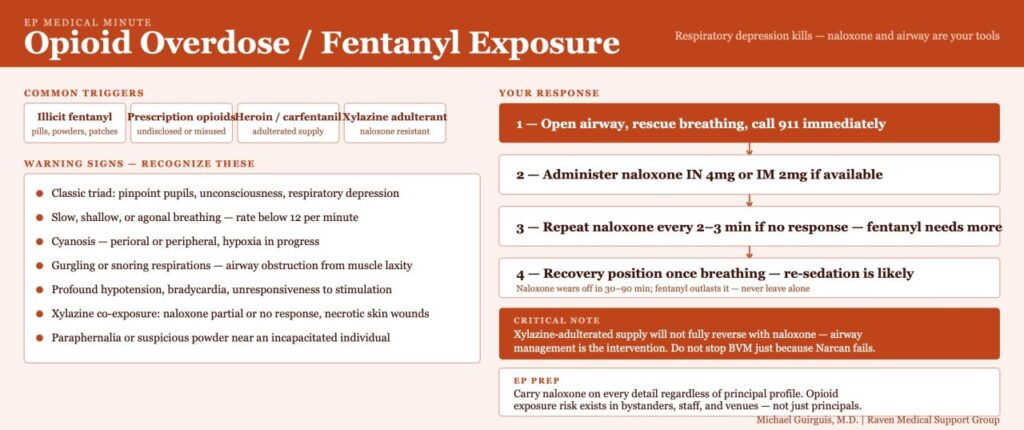
𝗨𝗻𝗱𝗲𝗿𝘀𝘁𝗮𝗻𝗱𝗶𝗻𝗴 𝗢𝗽𝗶𝗼𝗶𝗱 𝗢𝘃𝗲𝗿𝗱𝗼𝘀𝗲: This does not only happen on the street. It happens in penthouses, on private jets, at corporate retreats, and in hospitality suites. The fentanyl supply chain is now so contaminated that any controlled substance your principal or their entourage is using carries overdose risk. You need to be ready.
𝗪𝗵𝗮𝘁 𝗖𝗮𝘂𝘀𝗲𝘀 𝗜𝘁?
Opioid toxidrome in the EP environment comes from multiple sources:
• Illicit fentanyl, pressed pills, powders, and patches that look pharmaceutical
• Prescription opioids used in higher doses than disclosed or prescribed
• Heroin adulterated with carfentanil or other ultra-potent analogues
• Xylazine, a veterinary sedative now routinely mixed with fentanyl and not reversed by naloxone
𝗦𝗶𝗴𝗻𝘀 𝗮𝗻𝗱 𝗦𝘆𝗺𝗽𝘁𝗼𝗺𝘀
The classic toxidrome is recognizable:
• Pinpoint pupils, unconsciousness, and respiratory depression, the triad
• Breathing rate below 12 per minute, shallow, or agonal
• Cyanosis of the lips or periphery, hypoxia is already in progress
• Gurgling or snoring respirations from muscle laxity and airway obstruction
• Profound hypotension and bradycardia
• Xylazine co-exposure: partial or absent naloxone response, characteristic necrotic skin wounds at injection sites
• Suspicious powder, paraphernalia, or counterfeit pills near an incapacitated person
𝗡𝗼𝘁𝗲: Naloxone has a half-life of 30 to 90 minutes. Fentanyl outlasts it. Re-sedation after apparent recovery is not a failure, it is pharmacokinetics. Never leave the patient alone.
𝗧𝗿𝗲𝗮𝘁𝗺𝗲𝗻𝘁
Airway and naloxone. In that order.
• Open the airway, begin rescue breathing, and call 911 immediately
• Administer naloxone, intranasal 4mg or IM 2mg if available in your kit
• Repeat every 2 to 3 minutes if there is no response. Fentanyl requires more.
• Recovery position once breathing resumes, monitor continuously for re-sedation
• If xylazine is suspected and naloxone is not working, maintain airway support and do not stop BVM ventilation
𝗧𝗮𝗸𝗲 𝗔𝗰𝘁𝗶𝗼𝗻 𝗧𝗼𝗱𝗮𝘆
• Carry Naloxone: It belongs in your kit regardless of principal profile. The risk extends to staff, venues, and bystanders.
• Know the Xylazine Reality: Naloxone will not fully reverse a xylazine-contaminated overdose. Airway management is the intervention.
• No Assumptions: You do not know what your principal is using. Build that into your risk assessment.
𝗬𝗼𝘂𝗿 𝗧𝗵𝗼𝘂𝗴𝗵𝘁𝘀
Is naloxone part of your standard kit? Has the xylazine issue changed how your team thinks about overdose response?
Follow Michael Guirguis, M.D., of Raven Medical Support Group for weekly medical education built for Executive Protection and the Security Industry.